
The Coady Collection
The Coady Collections - an overview
This website provides public access to carefully reconstructed historical census and population records, beginning with the late-eighteenth-century surveys compiled by Michael Coady and others. The original datasets have been preserved in their authentic form, while being transformed into a modern, searchable system that allows individuals, households, occupations, and streets to be explored in ways that were previously impossible.
Researchers, genealogists, and local historians can search across names, locations, and household relationships, view records as they were originally compiled, or reinterpret them using contemporary mapping and analytical tools. The project aims to balance historical fidelity with accessibility, ensuring these important records remain both trustworthy and usable for future generations.
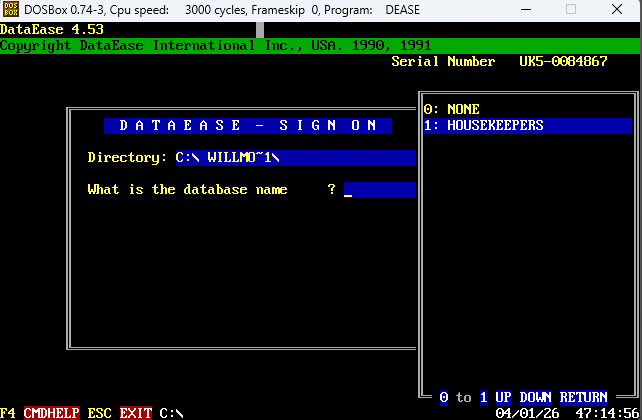
How the original system worked — and why it matters
The original Coady Collection databases were built and maintained by Michael Coady using DOS-based database software (dBASE/DataEase-style systems) during the late 1980s and 1990s. These tools organised people, households, occupations, and streets into structured records long before modern GIS or relational web databases existed, relying on carefully designed forms, coded relationships, and menu-driven reports. The system was not merely a storage mechanism: it embodied Coady’s analytical choices about how historical communities were structured and how evidence should be grouped and interpreted.
That original “view of the data” is historically significant. Coady’s classifications, household groupings, and reporting logic reflect the methodology of the researcher as much as the source material itself. This project preserves that perspective by retaining the original data structures and interpretive groupings alongside modern search, mapping, and visualisation tools. Visitors can explore the records as Coady saw them, while also benefiting from contemporary ways of navigating people and places — ensuring historical accuracy is maintained without freezing the data in obsolete technology.